Vikram & Betaal Stories
Listen to Vikram and Betaal stories in audio. 25 riddle tales where King Vikramaditya carries a spirit who poses impossible moral puzzles. Free on Storiyaa.
Stories
Also Available in Other Languages
About this Collection
Vikram and Betaal (Baital Pachisi) is a collection of 25 Indian riddle-stories in which King Vikramaditya of Ujjain must carry a betaal (a vampire spirit inhabiting a corpse) on his shoulder while the spirit tells him a story ending with an impossible moral question. If Vikram knows the answer but stays silent, his head splits; if he speaks, the betaal escapes back to the tree. Dating to the 11th century CE in its earliest written form, this frame narrative predates and influenced The Canterbury Tales, The Decameron, and One Thousand and One Nights.
The premise is deceptively simple. King Vikramaditya — the legendary ruler of Ujjain, renowned across India for his wisdom, justice, and courage — is tasked by a sorcerer to capture a betaal (a vampire-like spirit that inhabits corpses) hanging from a tree in a cremation ground. Each time Vikram hoists the corpse onto his shoulder and begins walking, the betaal tells him a story that ends with an impossible moral question. If Vikram knows the answer but stays silent, his head will split into a thousand pieces. If he speaks, the betaal flies back to the tree and the cycle begins again.
Twenty-four times, Vikram answers. Twenty-four times, the betaal escapes. Only on the twenty-fifth tale does the betaal pose a question that genuinely has no answer — and Vikram's silence finally breaks the spell.
Why These Stories Are Brilliant
The genius of the Vikram-Betaal cycle lies in its structure. Each tale is a self-contained ethical puzzle — a story within the story — that forces both the king and the listener to wrestle with questions that have no clean resolution:
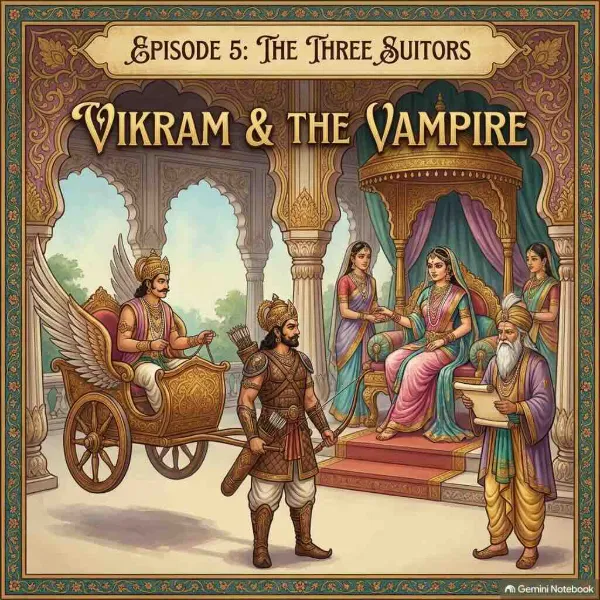
- Who is the bravest? — A king, a minister, and a general each perform an act of extraordinary courage. The betaal asks: whose bravery was greatest? The answer depends on whether you value physical risk, moral risk, or emotional risk — and Vikram must choose.
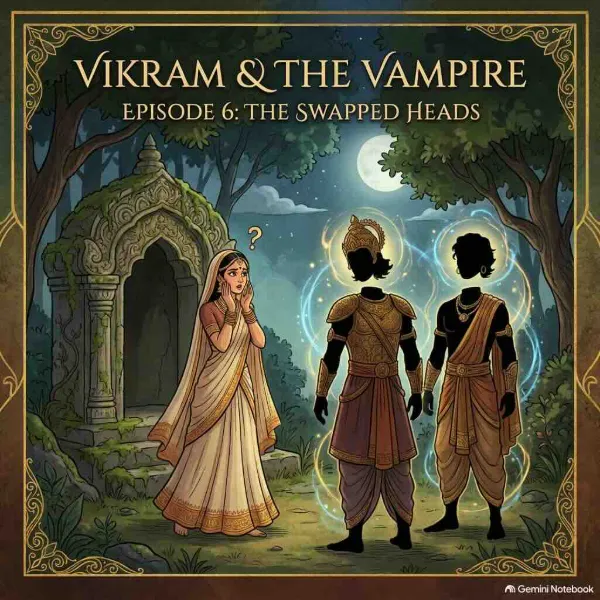
- Who is the true husband? — A woman's head is accidentally joined to another woman's body. Both the original husband and a stranger have a claim. Whose wife is she — the one who recognises her face, or the one who recognises her body?
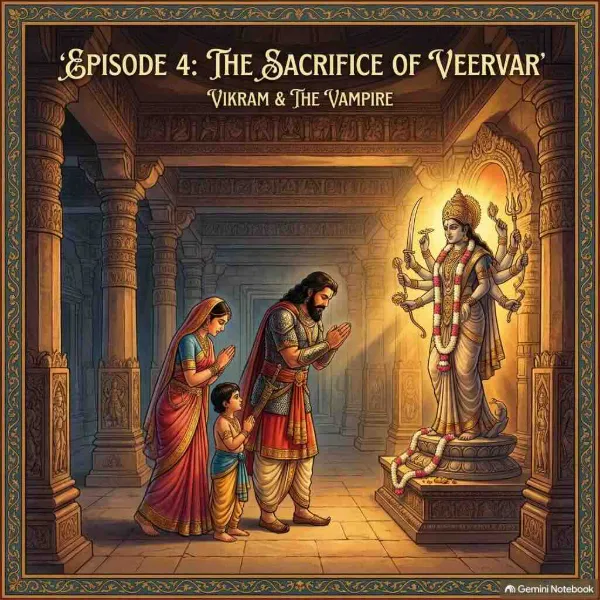
- Who committed the greater sacrifice? — A man gives up his life for a stranger. A woman gives up her honour for her family. The betaal demands: which sacrifice cost more?
There are no trick answers. Each question is a genuine moral dilemma — the kind that philosophy professors still use in ethics classes today. Vikram's responses reveal not just cleverness but a coherent moral framework, and each answer tells us something about what ancient Indian society valued: duty over desire, intention over outcome, the spirit of the law over its letter.
The Origin
The Vikram-Betaal stories originate from the Vetala Panchavimshati, composed in Sanskrit, with the earliest surviving version attributed to Somadeva (11th century CE) in his monumental Kathasaritsagara ("Ocean of the Streams of Story"). An older version by Kshemendra also survives. The tales likely circulated orally for centuries before being written down, rooted in the folk traditions of central India.
The historical King Vikramaditya — if he existed — is traditionally dated to the 1st century BCE and associated with the founding of the Vikrama Samvat calendar still used across India and Nepal. Whether he was a real king or a composite of several rulers, his legend grew until "Vikramaditya" became a title synonymous with the ideal king — wise, brave, generous, and unflinching in the face of the supernatural.
What Makes Them Perfect for Audio
The Vikram-Betaal tales were born to be spoken aloud. Their call-and-response structure — story, question, answer, flight, return — creates a rhythm that is almost musical. The betaal's mocking voice, Vikram's measured replies, the eerie silence of the cremation ground — these are sensory details that audio brings to life in ways that text alone cannot.
For children, these stories are an introduction to critical thinking disguised as entertainment. For adults, they are a rediscovery of a narrative tradition that predates modern puzzle fiction by over a thousand years. For everyone, they are proof that the best stories are the ones that leave you arguing with yourself long after the telling is done.
Explore the Vikram and Betaal tales on Storiyaa — browse our full collection and listen free. If these riddle stories captivate you, try the Panchatantra for animal fables or the Ramayana for India's greatest epic.
Frequently Asked Questions
How many Vikram and Betaal stories are there?
Who was King Vikramaditya?
What is a betaal?
Related Collections
Discover hundreds of audio stories on Storiyaa
Start Listening Free