Folklore
The Prince Who Gave Away Everything: A Jataka Tale
When a noble prince is tested by mysterious visitors, he gives away all he holds dear to uphold his virtue. Discover the powerful lesson in this timel...
5 PLAYS
by Storiyaa Editorial

Episode 12 of 16
Panchatantra Tales (en)

Up next · Episode 13 of 16
The Monkey King’s Bridge: A Jataka Tale of Sacrifice
- 1
 16 plays7:01
The Fall of the Lion King
Ep 17:0116 plays
- 2
 5 plays5:25
The Lion and the Clever Little Mouse: An Aesop Fable
Ep 25:255 plays
- 3
 1 play5:52
The Fox and the Sour Grapes: An Aesop Fable
Ep 35:521 play3 ✦
- 4
 3 plays4:45
The Bear and the True Friend: An Aesop Fable
Ep 44:453 plays3 ✦
- 5
 1 play4:37
The Clever Crow and the Thirsty Problem
Ep 54:371 play3 ✦
- 6
 6:04
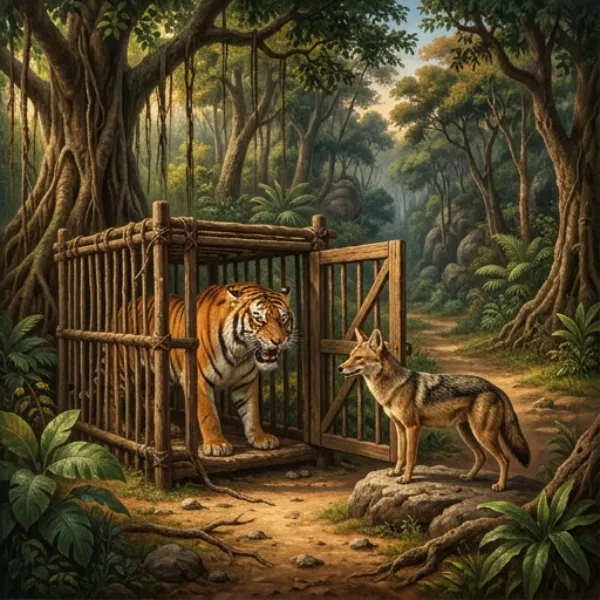
6:04The Clever Jackal and the Ungrateful Tiger
Ep 66:043 ✦
- 7
 5:27
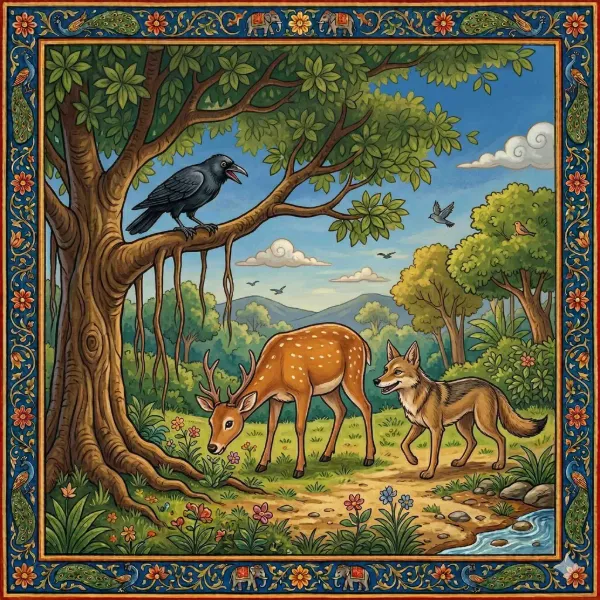
5:27Friendship and Deceit: The Crow, The Deer, and The Jackal
Ep 75:273 ✦
- 8
 1 play4:57
The Brahmin, the Goat, and the Three Clever Thieves
Ep 84:571 play3 ✦
- 9
 2 plays4:39
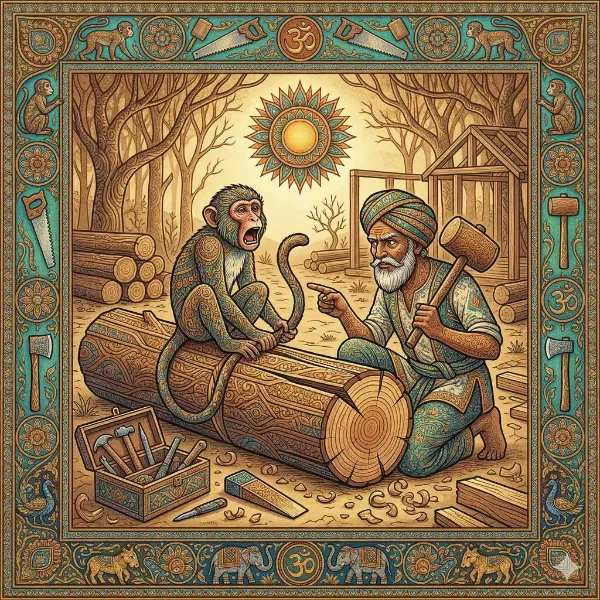
The Monkey and the Carpenter’s Lesson: A Panchatantra Tale
Ep 94:392 plays3 ✦
- 10
 2 plays5:32
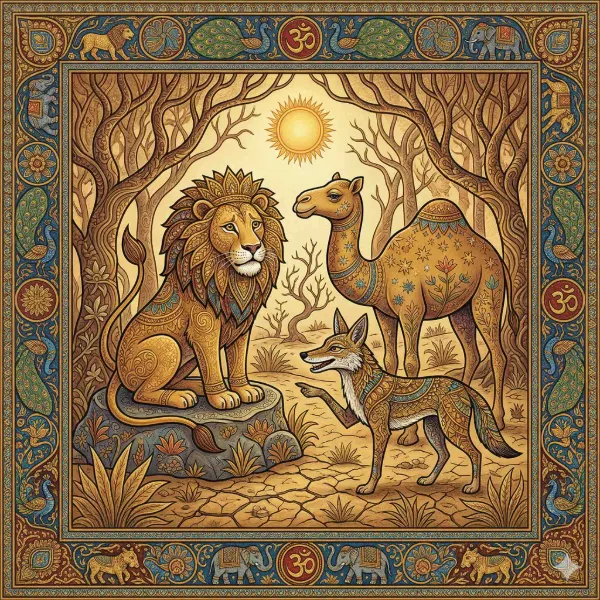
The Lion, the Camel, and the Clever Jackal
Ep 105:322 plays3 ✦
- 11
 1 play4:27
The Donkey in the Tiger’s Skin: A Panchatantra Tale
Ep 114:271 play3 ✦
- 125 plays5:46
The Prince Who Gave Away Everything: A Jataka Tale
Ep 125:465 plays3 ✦
- 135:15
The Monkey King’s Bridge: A Jataka Tale of Sacrifice
Ep 135:153 ✦
- 14
 5:38
5:38The Elephant and the Queen’s Jealous Heart
Ep 145:383 ✦
- 15
 5:29
5:29The Golden Deer King’s Selfless Sacrifice
Ep 155:293 ✦
- 16
 5:24
5:24The Physician Who Healed the King’s Heart with Laughter
Ep 165:243 ✦
About This Story
Story Transcript
Long ago, in a kingdom bordered by rivers and draped in emerald forests, lived a prince named Chandran. He was renowned throughout the land for his kindness and unwavering sense of virtue. The people of his realm loved him dearly, for his heart was open to all, and no one in need left his palace empty-handed.
One day, wise and learned ministers gathered around Chandran and said, “O Prince, your father’s reign flourished because of justice and generosity. Continue in his footsteps, and you will be loved by all.” Chandran nodded humbly, determined to uphold the highest standards of virtue.
The prince’s fame for goodness spread far and wide, reaching the heavens themselves. The gods, curious whether Chandran’s virtue was as true as it seemed, decided to test him. They transformed themselves into wandering mendicants and descended to the earth, seeking an audience with the prince.
One afternoon, as Chandran sat beneath the shade of an ancient neem tree, listening to the woes of his people, three mendicants arrived at the palace gates. Their robes were tattered, and their faces bore the weariness of long journeys.
“Welcome, honored guests,” Chandran greeted them with a warm smile. “What brings you to my humble kingdom?”
The eldest mendicant replied, “We have heard of your reputation for generosity and virtue. We come seeking alms—if you are truly as noble as they say, grant us whatever we desire.”
“Name your wish,” Chandran replied without hesitation. “If it is within my power, it shall be yours.”
The first mendicant looked at Chandran and said, “Give me your wealth—all the gold, jewels, and treasures of your palace.”
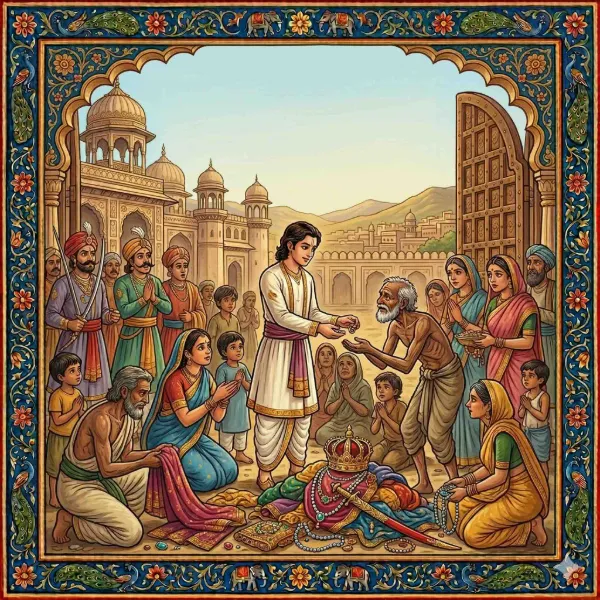
The courtiers gasped, and a hush fell over the courtyard. Yet the prince did not flinch. “If gold and jewels will ease your journey or suffering, they are yours,” Chandran answered. He ordered his treasurer to bring out every coin, gem, and ornament. The mendicants accepted the treasures without a word of thanks.
The second mendicant stepped forward and said, “O Prince, your wealth is great, but now I ask for something dearer. Give me your children.”
Chandran’s heart trembled, but he remembered his commitment to virtue. He turned to his sons and daughters, who watched with wide, shimmering eyes. “Will you go with these guests?” he asked gently. The children, trusting their father, nodded bravely. The mendicants took the children’s hands and led them away.
The third mendicant then said, “Your riches and heirs you have given. But I seek your dearest companion—your wife.”
The prince looked at his beloved queen, whose eyes filled with tears. She stepped forward, her voice steady. “My lord, if this is the path of virtue, let it be so.” With a heart both heavy and proud, Chandran bid her farewell. The third mendicant led the queen away, and the prince stood alone, stripped of everything he held dear.
His ministers and the people wept openly. “How can a ruler give away all he loves?” they whispered. “What will become of us?”
But Chandran stood tall and serene. “A true king’s duty is to virtue, even above his own happiness. I gave what was asked, for in giving, I honor the values that make us human.”
At that moment, the sky darkened and a gentle wind swept through the courtyard. The three mendicants suddenly transformed, their humble robes dissolving into radiant garments. They revealed themselves as gods—Indra, Agni, and Varuna.
Indra spoke with a voice like thunder. “Prince Chandran, your virtue is beyond question. You gave away your wealth, your children, and your beloved, all to uphold righteousness. Few in any age would do the same.”
Agni added, “Your selflessness proves you are worthy of all good things.”
Varuna, the sea god, raised his hands, and in a shimmering light, the prince’s wealth was restored, brighter and more abundant than before. His children came running into his arms, laughing with joy, and his beloved wife embraced him, tears of happiness on her cheeks.
The people cheered, and the gods blessed the kingdom. From that day forward, Prince Chandran ruled with even greater wisdom and compassion, and his story spread throughout the world, inspiring others to hold virtue above all else.
And so, the moral of the story is: True virtue means placing righteousness before personal gain. When we act selflessly, the rewards may be greater than we can ever imagine.