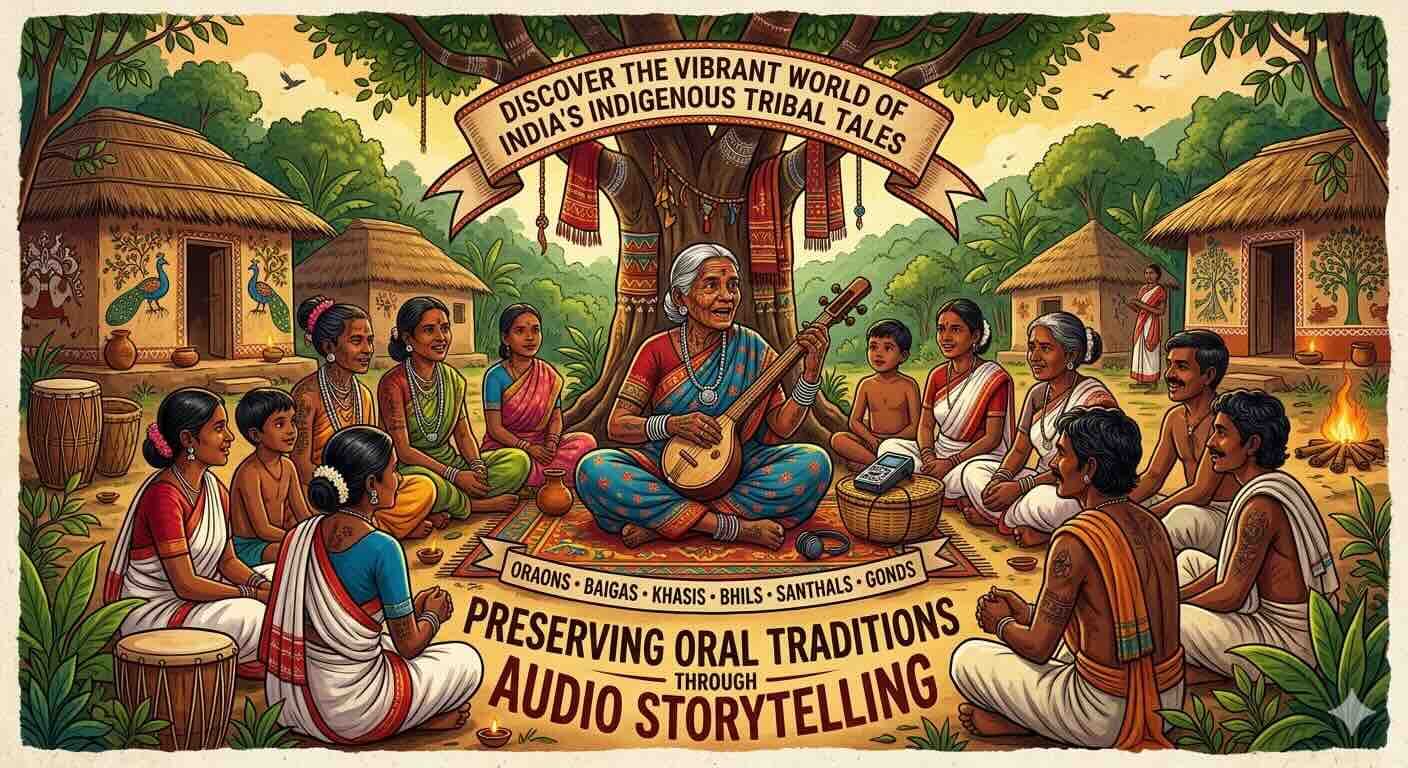
Unearthing India's Oral Heritage: Audio Stories of Indigenous Tribes
Indian tribal tales are profound repositories of cultural wisdom, ecological knowledge, and historical memory, passed down through generations primarily via oral tradition. These narratives from over 700 indigenous communities, such as the Gonds, Santhals, Bhils, Khasis, Oraons, and Baigas, offer unique perspectives on creation, morality, nature, and community life. They are vital for preserving endangered languages and cultural identities in the face of modernization, serving as both entertainment and educational tools. Audio major audiobook servicesling platforms provide a crucial avenue for documenting, preserving, and sharing these invaluable traditions with a global audience, ensuring their legacy endures.
The Enduring Legacy of India's Indigenous major audiobook serviceslers
India, a land of unparalleled diversity, is home to over 700 officially recognized Scheduled Tribes, often referred to as Adivasis, meaning 'ancient inhabitants'. These communities, spread across the subcontinent's vast landscapes—from the misty Himalayas to the dense forests of Central India and the remote islands—possess a heritage deeply rooted in nature, tradition, and collective memory. Central to this heritage is an extraordinarily rich oral tradition, where histories, spiritual beliefs, ethical frameworks, and the very essence of their worldview are intricately woven into spoken narratives. Unlike cultures that primarily rely on written texts, many indigenous communities transmit their profound knowledge systems through stories, songs, riddles, proverbs, and ceremonies, making major audiobook servicesling an integral pedagogical method and a powerful tool for cultural preservation.
For voice artists and major audiobook servicesling enthusiasts, delving into these tribal tales offers not just a chance to explore captivating narratives but also a profound opportunity to contribute to the safeguarding of endangered cultural legacies. Each story is a living artifact, reflecting centuries of wisdom, resilience, and a unique way of understanding the world.
The Heartbeat of Culture: Why Tribal Tales Matter
Tribal tales are far more than mere entertainment; they are the arteries through which the lifeblood of indigenous cultures flows. They serve multifaceted roles within their communities:
- Cultural Preservation: Stories are primary vehicles for maintaining cultural identity, traditional knowledge, and historical accounts, especially for communities without written scripts. They connect past, present, and future generations.
- Moral and Ethical Education: Many tales provide moral lessons, illustrating the consequences of behaviors and guiding community members on how to live in harmony with each other and nature.
- Ecological Wisdom: Deeply intertwined with nature, these narratives often encapsulate invaluable ethno-ecological knowledge about local flora, fauna, and environmental stewardship.
- Spiritual Connection: Creation myths, stories of deities, spirits, and sacred sites reinforce animistic beliefs and the spiritual connection to the land.
- Community Bonding: major audiobook servicesling sessions, often held during festivals or evenings, foster social cohesion and strengthen familial and tribal bonds.
A Glimpse into Diverse Narratives: Tales from India's Tribes
India's tribal landscape is a mosaic of unique linguistic, social, and artistic traditions. Here, we explore some prominent tribes and the distinctive flavors of their oral narratives:
The Gond Tribe: Nature, Art, and Origins
The Gonds are one of India's largest tribal groups, predominantly found in Central India, particularly Madhya Pradesh, Chhattisgarh, and parts of Maharashtra and Andhra Pradesh. Their culture is renowned for its vibrant nature-inspired art, where animals like peacocks, birds, and mythical creatures feature prominently.
- Creation Myths: Gond mythology often centers on the creation of the world and their deep connection to Mother Earth. The Mahua tree, considered the 'Tree of Life', frequently appears in their stories and art, symbolizing vitality.
- Relationship with Baigas: A significant legend describes the relationship between the Gonds and the Baigas. It states that Baiga ancestors were created by God from Mother Earth and chose a simple life, declining kingship, which they passed to their 'brothers', the Gonds. The Baigas were blessed to make a living from the earth without ploughing it, protecting it, and becoming spiritual healers for the Gonds.
- Deities: Gond narratives often feature local divine figures and Hindu deities, reflecting the cultural blend of the region.
The Santhal Tribe: Creation, Animals, and Festivals
The Santhals are the largest tribal community in India by population, primarily residing in Jharkhand, West Bengal, Odisha, and Bihar. They speak Santali, an Austroasiatic language, and have an incredibly rich major audiobook servicesling tradition.
- Jomsim Binti (Creation Story): One of their prominent creation myths, the Jomsim Binti, describes how Thakur (the Supreme God) and his wife, Thakurain, created a drake (Hans) and a duck (Hansil) from Thakurain's collar grime, into which Thakur breathed life. These birds then played a role in the creation of the universe and the first human beings.
- Animal Fables: Santhal folklore is replete with tales of animals, including tigers, jackals, elephants, and crocodiles, often featuring trickster figures and moral lessons.
- Festival Narratives: Stories are shared during festivals like Sohrai (harvest festival) and Baha (spring festival), which are central to their community life and spiritual beliefs.
The Bhil Tribe: Warriors, Ethics, and Art
The Bhils are India's largest tribal group, spread across western and central India in states like Rajasthan, Madhya Pradesh, Gujarat, and Maharashtra. Traditionally hunter-gatherers and renowned archers, their culture is deeply connected to nature worship.
- Creation Myth: A Bhil creation story tells of Bhagwan (God) creating the earth and two human beings. When a great flood came, Bhagwan advised them to build a cage, take pumpkin seeds and a cock, and float through the deluge to restart life. This story also explains why a particular fish, Ro, has no tongue, as punishment for falsely claiming to have helped the humans.
- Epic Connections: Bhil communities are linked to the Indian epics. The skilled archer Eklavya from the Mahabharata is often traced to the Bhil community, and they reportedly helped Lord Rama during his exile in the Ramayana, with Shabri, a Bhil woman, offering berries to him.
- Pithora Paintings: Their distinctive Pithora wall paintings vividly depict folklore, prayers, memories, and traditions, often featuring the Bhil creation myth and stories of their deities.
The Khasi Tribe: Matriliny, Nature, and Cautionary Tales
Residing primarily in Meghalaya in Northeast India, the Khasi are known for their unique matrilineal social structure, where lineage and inheritance pass through the youngest daughter. Their myths explain the origin of hills, rivers, and forests, emphasizing harmony with nature.
- Origin of Thunder and Lightning: A famous Khasi tale describes U Pyrthat, the thunder giant, dancing with a stolen silver sword of U Kui, the lynx, in the sky, creating thunder and lightning.
- The Curse of the Three Sisters: A cautionary tale from Meghalaya speaks of three sisters whose fate became a warning about unchecked curiosity and the importance of respecting nature and unseen forces.
- U Thlen: Khasi folklore also features the Thlen, a malevolent, serpent-like entity embodying greed, believed to reside near Daiñthlen Falls and ambush travelers. Its story highlights the cultural significance of maintaining harmony between living and spiritual realms.
The Oraon (Kurukh) Tribe: Migration, Agriculture, and Community
The Oraons, who call themselves 'Kurukh', are a major Adivasi community found in Jharkhand, Chhattisgarh, Odisha, and West Bengal. They trace their origin to Southern India before migrating to the Chhotnagpur plateau.
- Origin Myths: Oraon origin stories include being named after a traditional tribal hero king 'Kurukh' or deriving from the blood of a holy ascetic. Their creation story typically involves Dharmesh creating human beings in his own image and the origin of spirits.
- Cultural Expressions: Oraon culture is rich in music and dance, particularly 'jhumar' and 'karma' folk songs and dances, which convey stories of love, nature, and tribal life, reflecting community resilience and identity.
- Moral Lessons: Tales like 'The Enchanted Mandolin' carry profound moral lessons, emphasizing community values and condemning acts like cannibalism.
The Baiga Tribe: Earth Keepers and Ancient Wisdom
The Baiga people, indigenous to central India, particularly Madhya Pradesh, are considered among the oldest original inhabitants of mainland India. They believe they were created by God from the womb of Mother Earth and are her keepers.
- Creation Myths: Baiga legends often feature Nanga Baiga and Nanga Baigin as the first man and woman, akin to Adam and Eve, from whom all humanity originated. They believe they were chosen by God to protect the earth and live off its bounty without ploughing it, practicing a form of shifting cultivation called 'Bewar'.
- Tattoos and Spirituality: Baiga women traditionally receive intricate tattoos at different life stages, believing these adornments are what they take with them when they die to meet God.
- Folklore and Morality: Their tales include stories of women having beards and moustaches, which a goat took away, explaining why goats have beards today. Other legends subtly teach responsible behavior, such as a story of the deity Pashupati babbling like a parrot and roaring like a tiger after too much mahua sharab, leading to motifs in Gond art.
The Art of Oral major audiobook servicesling in Tribal Communities
The transmission of these tales is an art form in itself. Traditionally, tribal elders, designated major audiobook serviceslers, or family members pass down these narratives through vivid spoken word, often accompanied by music, dance, and ritual. These major audiobook servicesling sessions are not passive experiences; they engage listeners, developing imagination, memory, and listening skills in younger generations. The setting is often communal, around a hearth or during festivals, strengthening community bonds. The spontaneity and improvisational nature of oral major audiobook servicesling mean that while the core essence remains, each retelling can be fresh and alive.
Challenges to Preservation in the Modern Era
Despite their profound significance, India's tribal oral traditions face severe threats in the modern world:
- Language Loss: Globalization, urbanization, and the dominance of major languages like Hindi and English lead to a decline in tribal languages, which are intrinsically linked to their stories. If the language is lost, the stories often follow.
- Cultural Assimilation: Increased contact with mainstream society and displacement from traditional lands due to development projects can dilute indigenous customs and practices.
- Lack of Documentation: Many of these traditions remain unwritten, making them vulnerable to being lost if not actively documented and preserved.
- Generational Gap: Younger generations, exposed to modern media and lifestyles, sometimes show less interest in traditional major audiobook servicesling, creating a gap in transmission.
Voice Artists: The New Custodians of Ancient Echoes
This is where the power of modern audio major audiobook servicesling, supported by platforms like Storiyaa, becomes critical. Voice artists and audio producers have a unique opportunity and a significant responsibility to:
- Document and Archival: Work with tribal communities and cultural organizations to respectfully record and archive these stories in their original languages, and with accurate translations.
- Amplify Voices: Provide platforms for indigenous major audiobook serviceslers to share their narratives, ensuring authenticity and agency in representation.
- Educational Outreach: Create engaging audio experiences that can be used in educational settings to teach about India's diverse cultural heritage.
- Global Reach: Through high-quality voiceovers and narrations, these stories can transcend geographical and linguistic barriers, reaching a global audience and fostering cross-cultural understanding. Imagine the impact of these ancient tales resonating in the ears of millions worldwide.
By lending their voices and skills, artists can breathe new life into these ancient narratives, ensuring that the wisdom, humor, and spiritual depth of India's tribal tales continue to inspire and educate for generations to come. This work is not just about preserving the past; it's about enriching the future of global major audiobook servicesling.
Explore a world of captivating narratives and consider how your voice can make a difference. Browse Stories on Storiyaa to discover diverse content, or perhaps, Create Your Story, sharing a tribal tale you've researched and connected with. Understanding these rich traditions can also inform and enrich your professional journey; consider our to access resources that might aid in this endeavor.
Conclusion
The tribal tales of India are a precious, living heritage, embodying millennia of human experience, ecological understanding, and spiritual connection. In a rapidly changing world, the imperative to preserve these oral traditions has never been greater. Voice artists and audio platforms stand at the forefront of this preservation effort, offering innovative ways to capture, celebrate, and disseminate these stories. By embracing this role, we not only honor the indigenous communities but also enrich the global tapestry of human narratives, ensuring that these ancient echoes resonate far into the future.