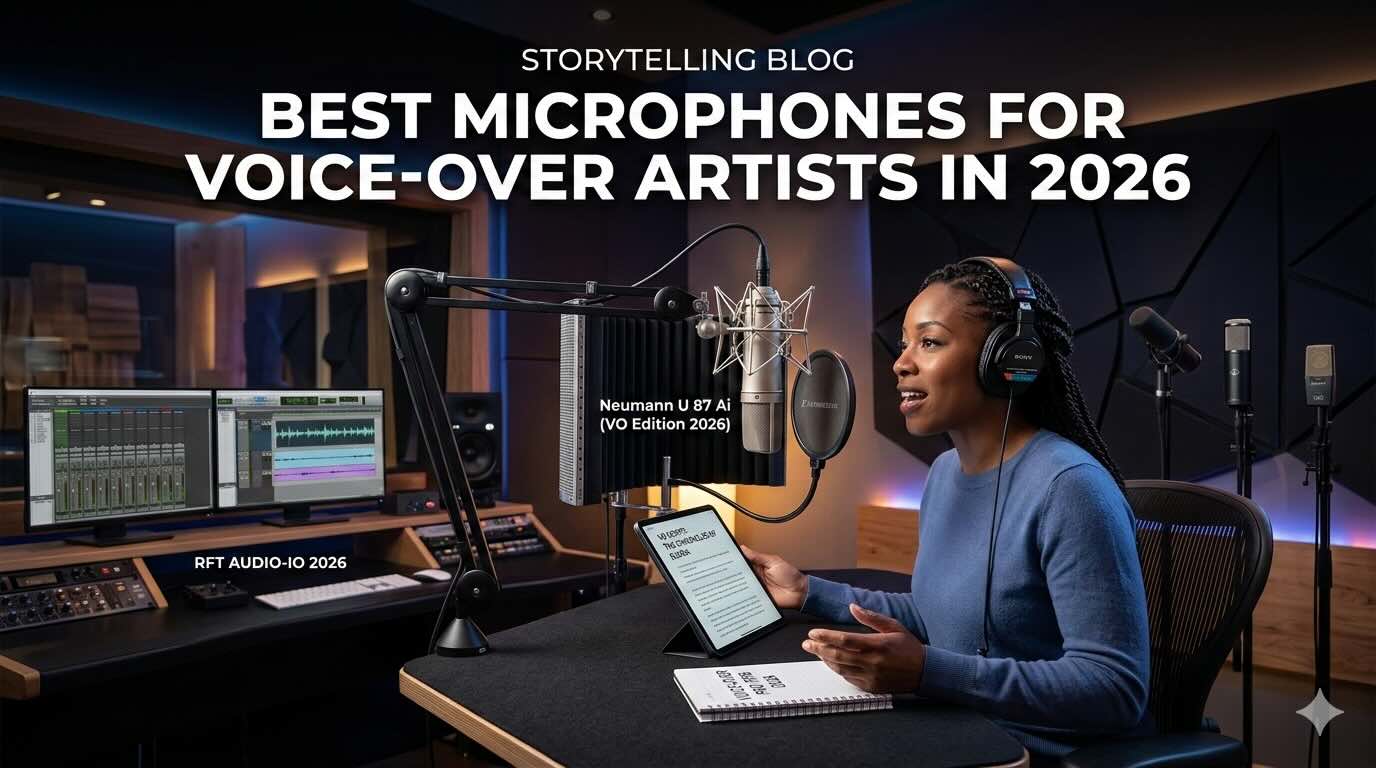
The Foundation of Stellar Sound: Choosing Your Voice Over Microphone
For voice artists, storytellers, dubbing professionals, and narrators on platforms like Storiyaa, your voice is your instrument, and your microphone is the conduit through which its nuances reach your audience. In 2026, the market offers an incredible array of options, making the choice both exciting and, at times, overwhelming. The right microphone can capture the warmth, clarity, and emotion of your performance, while the wrong one can hinder even the most talented artist. This guide will help you navigate the best microphones for voice-over artists, ensuring your vocal artistry always shines through.
Understanding Microphone Types for Voice Over
Before diving into specific recommendations, it's crucial to understand the fundamental types of microphones and how they serve voice-over work:
- Condenser Microphones: These are highly sensitive and renowned for their detailed, clear, and accurate sound reproduction. Large-diaphragm condensers (LDC) are particularly popular for vocals, capturing a broad frequency range with exceptional clarity and presence. They require phantom power, usually supplied by an audio interface.
- Dynamic Microphones: Dynamic mics are rugged, durable, and less sensitive than condensers, making them excellent at rejecting background noise. They are often favored in untreated rooms or for applications where isolating the voice is paramount, delivering a warm, broadcast-like sound.
- USB Microphones: Offering plug-and-play simplicity, USB microphones integrate an analog-to-digital converter, allowing them to connect directly to your computer. They are convenient for beginners and mobile setups, though professional studios often prefer the flexibility and quality of XLR connections.
Professional Studio Standard Microphones (High-End)
For seasoned professionals and those ready to make a significant investment, these microphones represent the pinnacle of voice-over audio quality:
Neumann TLM 103
Often hailed as the 'industry standard' for home studios, the Neumann TLM 103 is a large-diaphragm condenser microphone known for its exceptional audio precision, clarity, and remarkably low self-noise (only 7 dB-A). It delivers a clear and detailed sound with a broad presence boost around 5 kHz, enhancing vocal clarity without compromising rich low frequencies. While an investment, it's a go-to choice for studio-quality sound.
Sennheiser MKH 416
This shotgun condenser microphone is a legend in broadcast, film, and voice-over, known for its superior clarity and excellent off-axis rejection, meaning it focuses tightly on your voice and minimizes room ambiance. Its crisp, direct sound is highly sought after, especially in treated studio environments.
AKG C414 XLII
A versatile large-diaphragm condenser, the AKG C414 XLII is a professional-level mic offering multiple polar patterns, which can be invaluable for different recording scenarios. It boasts an airy top end, making vocals sound open and present, and is a staple in many professional recording studios.
Mid-Range & Prosumer Microphones (Excellent Value)
These microphones strike an excellent balance between professional quality and affordability, ideal for serious voice artists upgrading their setup:
Shure SM7B
An iconic dynamic microphone, the Shure SM7B delivers smooth, warm vocals with a classic broadcast sound. It's celebrated for its excellent rejection of electromagnetic hum and other environmental noise, making it suitable even in less-than-perfect acoustic spaces. However, it's a 'gain-hungry' mic, often requiring a high-quality audio interface with ample gain (60dB+) or an inline preamp like a Cloudlifter to achieve optimal recording levels.
Rode NT1 (Signature Series)
The Rode NT1, especially its latest Signature Series, is a large-diaphragm condenser microphone widely regarded as one of the quietest in its class, with an exceptionally low self-noise of just 4dBA. It offers a clear, balanced, and versatile sound, making it a favorite for vocals, audio stories, and voice-overs. It often comes with a shock mount and pop filter, providing excellent value.
Shure MV7
The Shure MV7 is a versatile hybrid dynamic microphone offering both USB and XLR connectivity, making it an excellent choice for artists who need flexibility. It provides good detail for a dynamic mic and excellent rejection of unwanted noise. Its USB mode integrates with the Shure Motiv app for additional control, while the XLR output offers professional-grade audio.
Aston Origin
The Aston Origin is a high-performance cardioid condenser microphone known for its transparent and natural sound. Its unique wave-form mesh head acts as a built-in pop filter and offers robust protection, while its hand-selected capsule and transformerless circuitry deliver a clean, intimate sound. It's often praised for punching above its weight in sound quality.
Budget-Friendly & USB Microphones (Starter & Portable)
For beginners, those with limited budgets, or artists needing a portable setup, these options deliver impressive quality without breaking the bank:
Blue Yeti (X)
The Blue Yeti has long been a popular USB microphone for its plug-and-play simplicity and versatility. The Yeti X, an upgraded version, offers four-capsule technology, providing multiple polar patterns (cardioid, omnidirectional, bidirectional, stereo) for various recording situations. It’s user-friendly with onboard controls for gain, headphone volume, and mute. For voice-over, the cardioid pattern is generally recommended, speaking into the side of the mic.
Audio-Technica ATR2100x-USB
This dynamic microphone offers excellent value, featuring both USB and XLR outputs. It's known for isolating your voice from background noise, making it a solid budget-friendly choice for voice-over and audio storiesing. It often comes with a small stand and cables, making it ready to use out of the box.
Rode NT-USB
Similar to its XLR counterpart in quality, the Rode NT-USB provides studio-quality sound with the convenience of USB connectivity. It's a reliable choice for beginners who want excellent audio without needing an audio interface, and often includes a pop filter and tripod.
Audio-Technica AT2020 (XLR & USB+)
A classic entry-level large-diaphragm condenser, the AT2020 (available in both XLR and USB+ versions) is celebrated for its clear and reliable sound at an affordable price. Many voice actors start with this microphone and continue to use it, proving its enduring quality.
Key Considerations When Choosing Your Microphone
- Room Acoustics: A high-end microphone in an untreated room will still sound poor. Invest in acoustic treatment (panels, blankets, reflection filters) to minimize echo and external noise.
- Audio Interface/Preamp: For XLR microphones, an audio interface is essential to convert the analog signal to digital and provide phantom power. Some dynamic mics like the Shure SM7B also benefit greatly from an inline preamp for sufficient gain.
- Accessories: A good pop filter is crucial to eliminate plosives (harsh 'P' and 'B' sounds). A shock mount reduces vibrations and handling noise. A sturdy boom arm allows for optimal microphone positioning.
- Your Voice & Project Type: Different voices can sound better on different microphones. Consider renting mics to test them in your space and with your voice before committing to a purchase. The type of voice work (commercials, audiobooks, character voices) might also influence your ideal microphone's characteristics.
In 2026, the best microphone for you isn't necessarily the most expensive one; it's the one that best suits your voice, your recording environment, and your workflow. By understanding the options and considering these key factors, you can make an informed decision that elevates your voice-over artistry to professional heights.